SUV Trends and Popular Models in 2026
SUVs in 2026 sit at the center of the car market because they combine family-friendly space, elevated driving visibility, and a wider choice of powertrains than almost any other vehicle class. Buyers are no longer forced into a simple fuel-versus-function tradeoff, since hybrids, plug-in hybrids, and full EVs now cover very different routines. At the same time, rising prices, software-heavy cabins, and uneven charging access make the category harder to navigate. That tension between convenience and complexity is exactly why the 2026 SUV scene deserves a closer look.
Outline: • how SUV design and buyer priorities are changing • why hybrids, plug-in hybrids, and EVs are influencing shopping decisions • which safety and software features matter in real daily use • which models are drawing the most attention across major segments • how shoppers can narrow the field with practical criteria instead of marketing buzz.
1. The Shape of the Market: What Is Defining SUV Trends in 2026
The biggest SUV story of 2026 is not simply that the category remains popular. It is that the definition of a useful SUV has become more refined. A decade ago, many buyers equated value with size alone. Today, the smarter purchase often means choosing the smallest vehicle that comfortably handles the household’s actual routine. That shift has helped compact and midsize crossovers stay dominant, because they offer easier parking, better efficiency, and lower ownership costs than larger truck-based models while still covering school runs, grocery trips, weekend sports gear, and moderate road-trip duty.
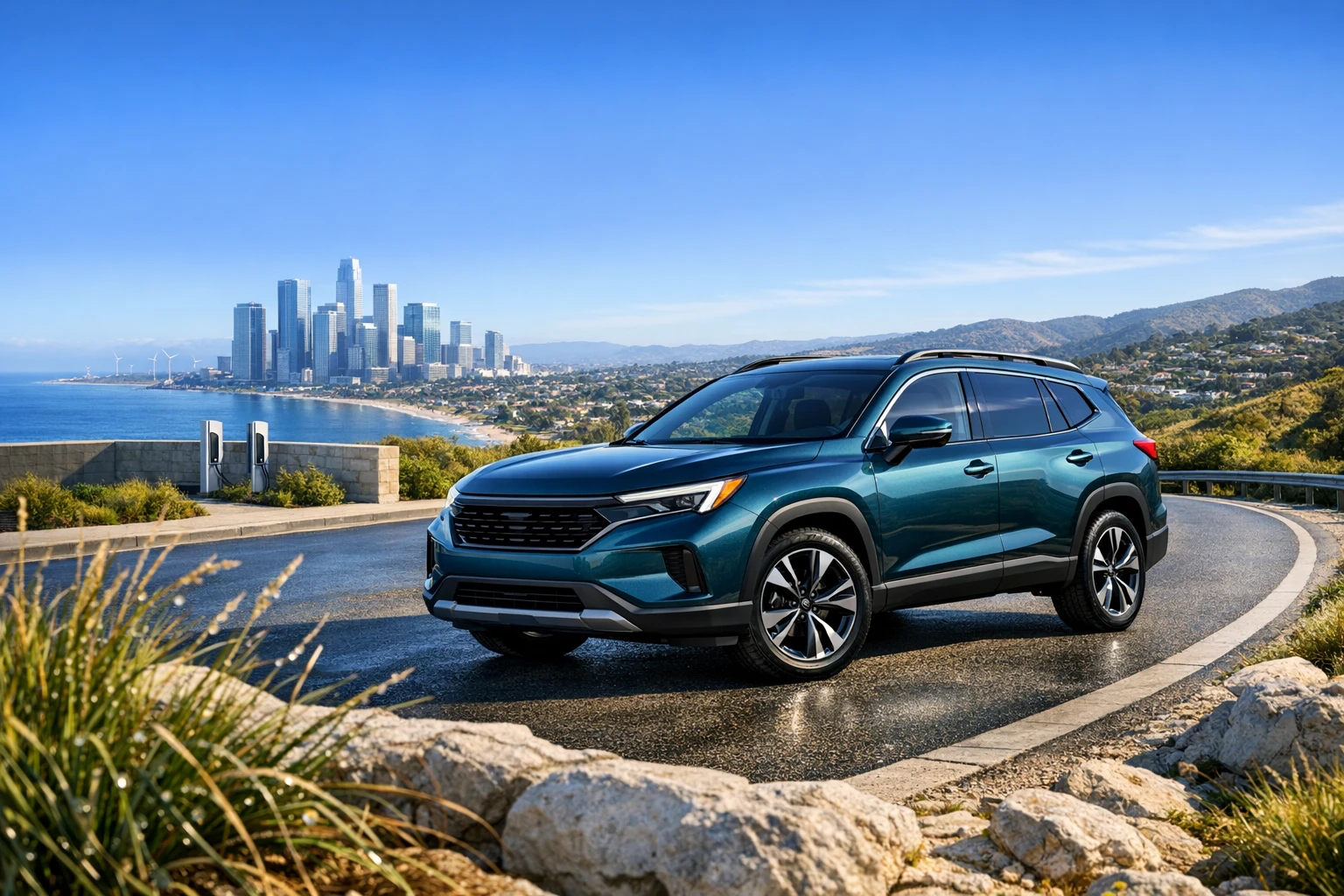
Design language also tells its own story. Many new SUVs still wear rugged styling cues such as squared-off fenders, upright front ends, roof rails, and contrast cladding, yet underneath the adventurous costume, most are optimized for suburban and urban life. Aerodynamics matter more than ever, especially for hybrid and electric variants, so body shapes have become a little smoother even when the marketing photos place them next to rocks, dust, and mountain sunsets. The modern SUV often resembles a hiking boot that has quietly learned office etiquette.
Several buyer priorities are pushing this market forward at the same time. The first is flexibility. Rear seats that slide, fold flat, or split in useful ways matter more than dramatic horsepower numbers for many households. The second is efficiency. Fuel prices and total ownership costs remain central concerns, which is why buyers increasingly ask not only what a vehicle costs to purchase, but what it costs to live with. The third is technology, though not in the abstract. People want phone integration, good cameras, helpful driver assistance, and intuitive climate controls, not a cabin that feels like a software experiment.
Three visible trends stand out across brands and price points:
• More trims now emphasize efficiency, including hybrid-first lineups.
• Cabin space is being used more intelligently, with better storage and flatter load floors.
• Safety and convenience features that were once premium extras are moving into mainstream models.
Another defining feature of the market is price stratification. Entry-level SUVs still exist, but well-equipped versions can quickly climb beyond what many buyers expect. That has made value-oriented trims more important than ever. In response, manufacturers are trying to create clearer ladders within their lineups: practical base versions, tech-focused middle trims, and near-luxury upper grades. This matters because the average shopper is comparing monthly payments, insurance, fuel costs, and resale value in one mental spreadsheet.
In short, the SUV market in 2026 is being shaped by right-sizing, smarter packaging, stronger efficiency demands, and a more skeptical customer. Buyers are not just asking what an SUV can do on paper. They are asking how gracefully it fits into real life, and that question is steering the entire segment.
2. Powertrains in Transition: Why Hybrids, Plug-In Hybrids, and EV SUVs Matter
If one trend captures the mood of the SUV market, it is the move away from a one-engine-fits-all approach. Traditional gasoline engines still matter, especially in lower-cost trims and in regions where charging infrastructure remains inconsistent, but they no longer dominate the conversation in the same effortless way. Buyers now arrive at dealerships with a more specific question: which powertrain fits my commute, my budget, and my tolerance for charging or refueling? That is a far more nuanced discussion than the old debate over four cylinders versus six.
Hybrid SUVs have become especially important because they solve a very practical problem. Many drivers want better fuel economy without changing their habits. A conventional hybrid answers that need with minimal lifestyle disruption. There is no plugging in, and the benefit is immediate in stop-and-go driving, where regenerative braking and electric assistance are most useful. That is why hybrid versions of mainstream family SUVs continue to attract attention. For households that rack up miles but do not want the planning demands of a full EV, the hybrid remains one of the easiest recommendations in the market.
Plug-in hybrid SUVs occupy a fascinating middle lane. For commuters who can charge at home and drive modest daily distances, they can deliver a meaningful portion of travel on electricity alone while preserving the backup of a gasoline engine for longer trips. In theory, that is a brilliant formula. In practice, the value depends heavily on usage. A plug-in hybrid makes the most sense when the owner truly plugs it in. If it spends most of its life running as a heavier gasoline vehicle, the financial upside becomes weaker.
Battery-electric SUVs are more credible than ever, especially for drivers with reliable home charging. Their strengths are clear:
• Quiet operation and quick acceleration
• Low routine maintenance compared with internal-combustion vehicles
• Smooth, one-pedal-style driving in many models
• Strong packaging efficiency because EV platforms often create more cabin room than exterior size suggests
Still, electric SUVs are not a universal answer. Public charging networks vary widely by region, towing and cold-weather range can change the ownership experience, and insurance or tire costs may surprise first-time EV buyers. This is where 2026 feels refreshingly adult. The market is no longer talking about electrification as a simple future slogan. It is talking about tradeoffs.
That honesty benefits shoppers. A hybrid may be ideal for a long-distance commuter without home charging. A plug-in hybrid may suit a suburban family with predictable weekly patterns. A battery-electric SUV may be excellent for a household that charges overnight and values low running noise, brisk performance, and fewer service visits. Gasoline-only options still make sense for budget-conscious buyers or those in areas with limited charging access.
The takeaway is simple: the best SUV powertrain is now context-dependent. In 2026, choosing an SUV is less about following a trend and more about matching the machine to the rhythm of everyday life.
3. Inside the Cabin: Technology, Safety, Comfort, and the Rise of Software-Centered SUVs
Step into a newly launched SUV and one change becomes obvious almost immediately: the cabin has become a digital workspace, entertainment lounge, navigation center, and safety command post all at once. Screens are larger, interfaces are denser, and manufacturers increasingly present software as a core selling point rather than a background tool. Yet the most successful SUVs are not necessarily the ones with the largest displays. They are the ones that combine digital convenience with clarity, comfort, and low-friction everyday usability.
That matters because buyers have grown more selective. A panoramic display may look impressive in a showroom, but if routine tasks require too many taps, the novelty fades quickly. This is why practical interface design has become a quiet point of competition. Shoppers now pay attention to whether climate controls are easy to access, whether smartphone integration is wireless and stable, whether camera views are crisp, and whether voice commands actually save time. In other words, good cabin tech should disappear into the experience rather than constantly asking for applause.
Safety technology has followed a similar path. Features that once belonged mainly to premium vehicles are now common in mainstream SUVs. Many models offer some combination of automatic emergency braking, blind-spot monitoring, rear cross-traffic alert, lane-keeping support, adaptive cruise control, parking sensors, and driver attention monitoring. The result is not that every SUV drives itself. Rather, the better ones reduce fatigue and help catch mistakes before they become expensive or dangerous.
Several points deserve careful comparison when evaluating a modern SUV:
• Does the driver assistance behave smoothly, or does it feel intrusive?
• Are physical controls still available for critical tasks?
• Is the second row comfortable enough for adults on longer trips?
• Does cargo space remain useful when all seats are occupied?
• Are software updates adding value, or merely shifting functions behind subscriptions?
Comfort also plays a larger role than many buyers expect during a quick test drive. Seat design, suspension tuning, road noise, and visibility can separate a merely fashionable SUV from one that feels genuinely satisfying after months of ownership. Some brands chase a firmer, sportier feel, while others focus on composure and family comfort. Neither approach is automatically better. The right answer depends on whether the vehicle’s life will center on city commuting, school pickup lines, highway travel, or rougher weather conditions.
A notable 2026 trend is that more shoppers are pushing back against feature overload. They want useful technology, but they do not want everything hidden behind layered menus or paywalled after purchase. This has encouraged some automakers to bring back sensible physical controls, improve menu logic, and emphasize cabin quality rather than novelty alone.
The strongest SUVs today understand a basic truth: people do not buy a dashboard. They buy a daily environment. When that environment feels calm, intuitive, and safe, the whole vehicle becomes more appealing, regardless of whether it wears a mainstream badge or a luxury emblem.
4. Popular SUVs in 2026: Which Models Are Standing Out and Why
Popularity in the SUV market rarely comes from one trait alone. The models that rise above the crowd usually succeed because they blend efficiency, packaging, reputation, comfort, and pricing into a package that feels easy to recommend. In 2026, the most discussed and frequently cross-shopped SUVs tend to fall into a few clear groups: compact all-rounders, three-row family haulers, and electric SUVs with broad lifestyle appeal.
Among compact SUVs, the Toyota RAV4 Hybrid and Honda CR-V Hybrid remain central reference points because they answer mainstream needs with very little drama. Both have strong reputations for practicality, solid resale value, and efficient daily driving. The RAV4 Hybrid often appeals to buyers who prioritize proven hybrid familiarity and straightforward utility, while the CR-V Hybrid is commonly praised for its roomy cabin, polished ride, and easygoing road manners. The Hyundai Tucson Hybrid and Kia Sportage Hybrid also deserve attention, especially for shoppers who want bold design, generous features, and competitive warranty coverage. Subaru’s Forester continues to attract buyers who value visibility, standard all-wheel drive in many markets, and a reassuringly pragmatic character.
Move into the midsize and three-row world, and the conversation changes. Space, second-row comfort, cargo flexibility, and family travel performance become crucial. The Kia Telluride still draws interest because of its upscale interior presentation, sensible packaging, and balanced pricing relative to its feature list. Hyundai’s Santa Fe and larger family-oriented offerings have also captured shoppers who want strong value and distinctive styling. Toyota’s Grand Highlander Hybrid has become particularly appealing for households that need genuine passenger room along with the fuel-economy advantage of electrification. The Honda Pilot remains relevant for buyers who prioritize usability, strong family packaging, and a clean, functional cabin rather than visual theatrics.
Electric SUVs form another high-visibility cluster. The Tesla Model Y remains influential because of its charging ecosystem access, quick performance, and strong mindshare, though competitors now offer compelling alternatives with different strengths. The Hyundai Ioniq 5 and Kia EV6, while crossover-like in shape, continue to attract attention for fast charging capability in suitable conditions, distinctive design, and efficient packaging. For shoppers seeking a more premium or adventure-focused experience, the Rivian R1S stands out with impressive capability, distinctive branding, and family-sized electric versatility at a higher price level.
A few broad observations help explain why these models are popular:
• Hybrids are winning with buyers who want efficiency without changing routine.
• Three-row SUVs remain a default choice for growing families that need flexibility.
• EV buyers are increasingly comparing charging convenience as seriously as horsepower.
• Interior usability and real cargo solutions matter as much as headline technology.
No single model is perfect for every driver. A compact hybrid may be ideal for commuting parents, while a larger three-row vehicle suits families with older children, sports gear, or frequent road trips. An electric SUV may feel brilliant for a home-charging owner and frustrating for someone without that setup. The popular SUVs of 2026 are not popular by accident. They fit recognizable lifestyles, and they do so with fewer compromises than many rivals.
5. Conclusion: How Buyers Can Choose the Right SUV in 2026
For today’s buyer, the smartest way to shop for an SUV is to start with habits rather than headlines. The market is crowded with impressive specifications, but the vehicles that feel best over time are usually the ones that match ordinary routines with surprising precision. Before comparing trims or debating wheel sizes, it helps to answer a few unglamorous questions. How many people regularly ride in the vehicle? How often is the cargo area truly full? Is there home charging available? How long is the commute? Does winter weather demand all-wheel drive, or merely good tires and sound judgment? Those answers narrow the field faster than any flashy advertisement.
Budgeting should also extend beyond the purchase price. Insurance, fuel or electricity costs, tire replacement, maintenance, and likely resale value all shape the real cost of ownership. A cheaper SUV is not automatically the better deal if it burns more fuel, carries weaker residual value, or requires expensive options to feel complete. Likewise, a more efficient model may justify its premium only if the owner’s mileage is high enough to benefit from it. This is where a calm, numbers-first approach pays off.
Different buyer profiles often point toward different solutions:
• Urban drivers may favor compact hybrids or smaller EV SUVs with easy maneuverability.
• Families with two or three children often benefit from practical three-row layouts and flexible seating.
• High-mileage commuters may see the best value in hybrids.
• Homeowners with dependable charging can make a stronger case for a full EV.
• Buyers keeping a vehicle for many years should prioritize reliability history, service access, and interface simplicity.
Test drives matter more than ever because modern SUVs can feel very different despite similar specifications. One model may have a calm ride and excellent visibility. Another may offer stronger acceleration but a busier cabin and firmer suspension. A third may seem ideal on paper, yet its controls may frustrate you within minutes. Spend time in traffic, on rough pavement, and at parking speeds. Check the rear seat. Load the cargo area. Pair your phone. Fold the seats. That is where the truth lives.
The SUV landscape in 2026 is rich, competitive, and far more nuanced than the old “bigger is better” era. Hybrids have become mainstream, plug-in hybrids reward the right routine, EVs are increasingly viable for prepared owners, and traditional gasoline models still serve plenty of buyers well. The best choice is not the trendiest badge or the loudest launch. It is the SUV that slips into your life so naturally that, after a few weeks, it feels less like a machine you bought and more like a tool that quietly gets everything done.